Demo
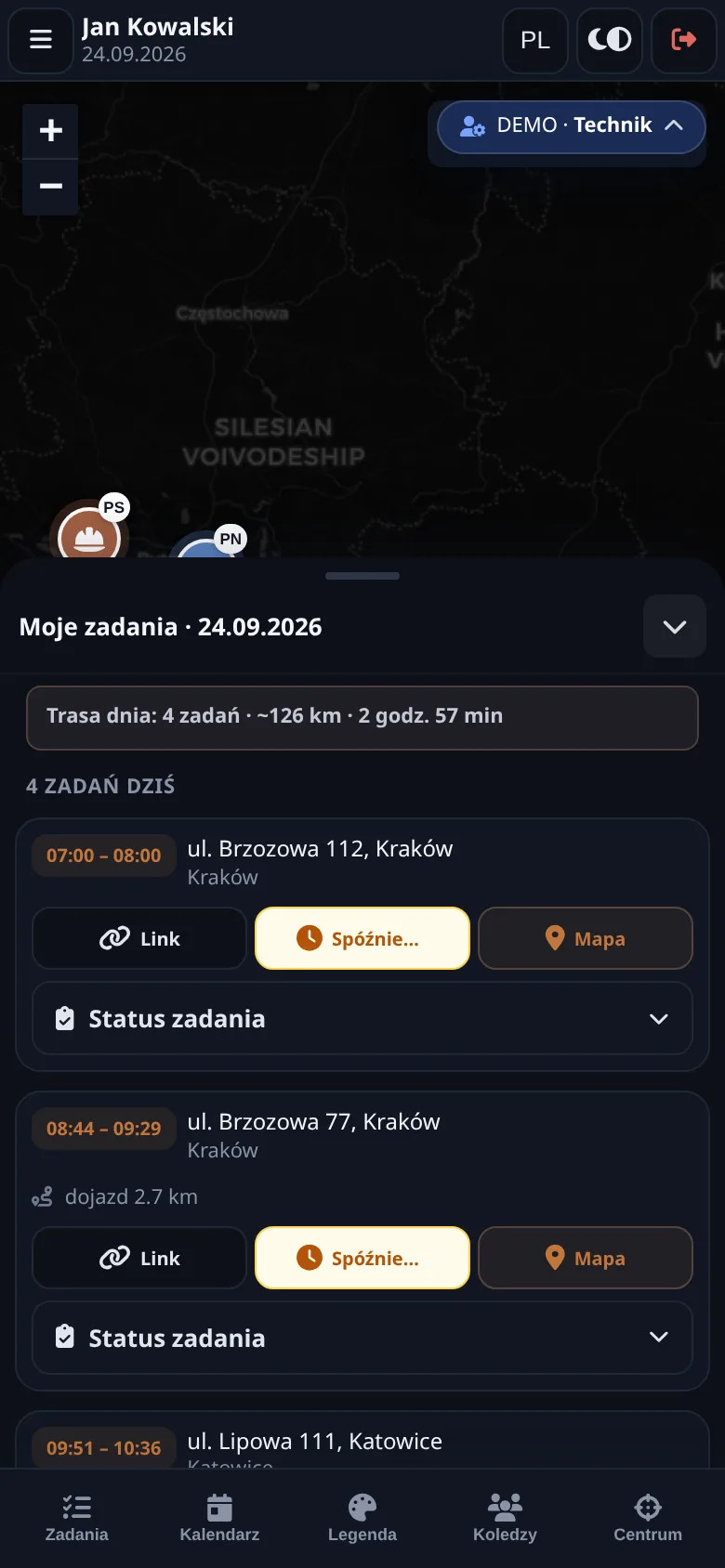
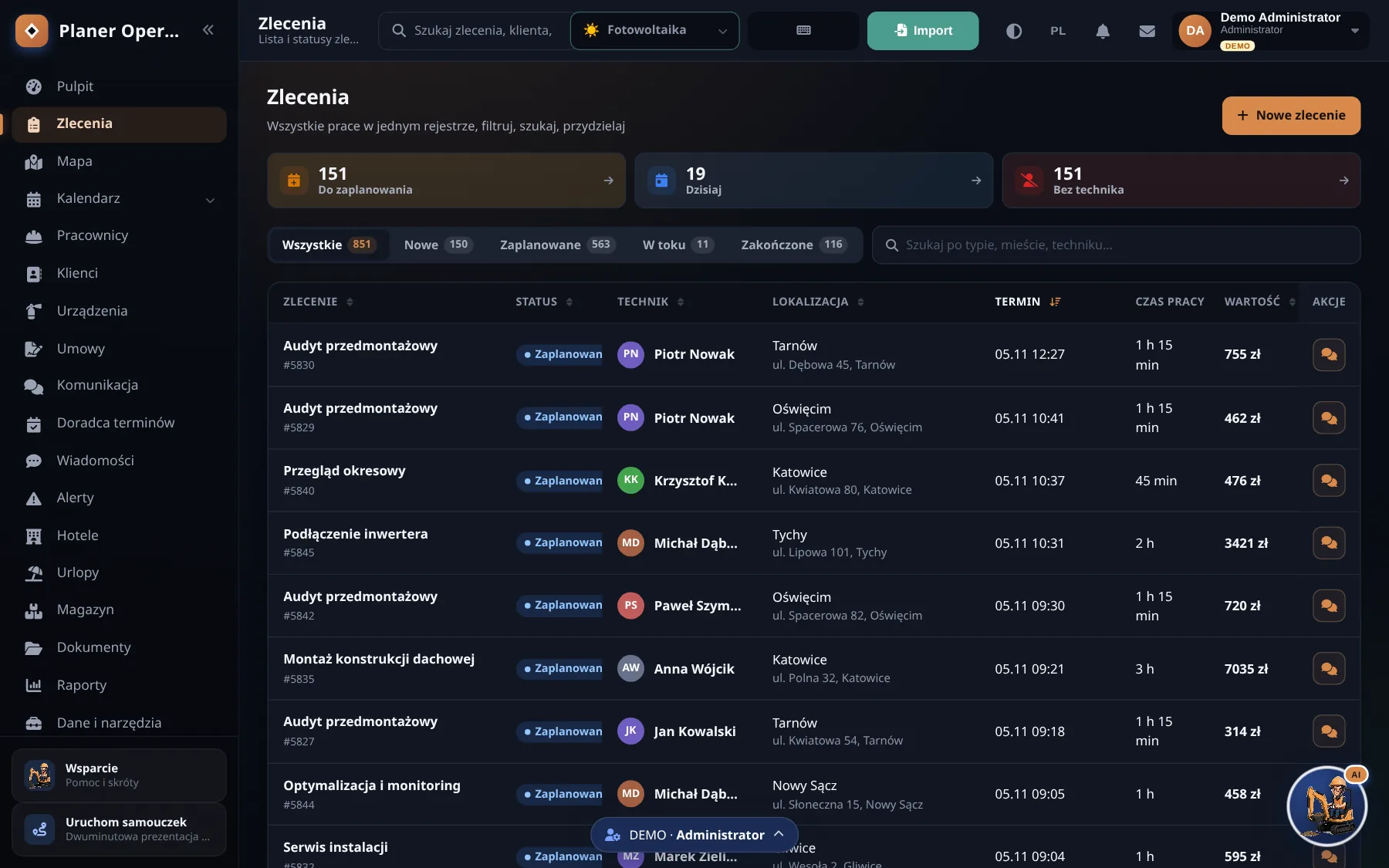
The planner as a company sees it.
- five trades, switched with one click
- four roles: admin, dispatcher, office, technician
- GPS in the demo is simulated
Field service scheduling
The dispatcher drags jobs onto the crew calendar and sees every technician on one map. The technician works on a phone, with or without signal. Recurring inspections create themselves and the visit report goes out as a PDF. A spreadsheet works as long as there are three crews.
The problem
An installation company with a few crews usually plans in a spreadsheet and on the phone. When a client moves an appointment, the dispatcher reworks the route in their head. When a technician finishes a fire extinguisher inspection, the report is handwritten and the office types it in later. The next inspection date lives in someone’s Outlook, if anyone put it there.
Planer Operacyjny puts all of that in one place. One codebase serves many trades: the trade is configuration, not a separate app.
Modules
Jobs and people on one layer. Geocoded addresses, daily routes on OpenStreetMap.
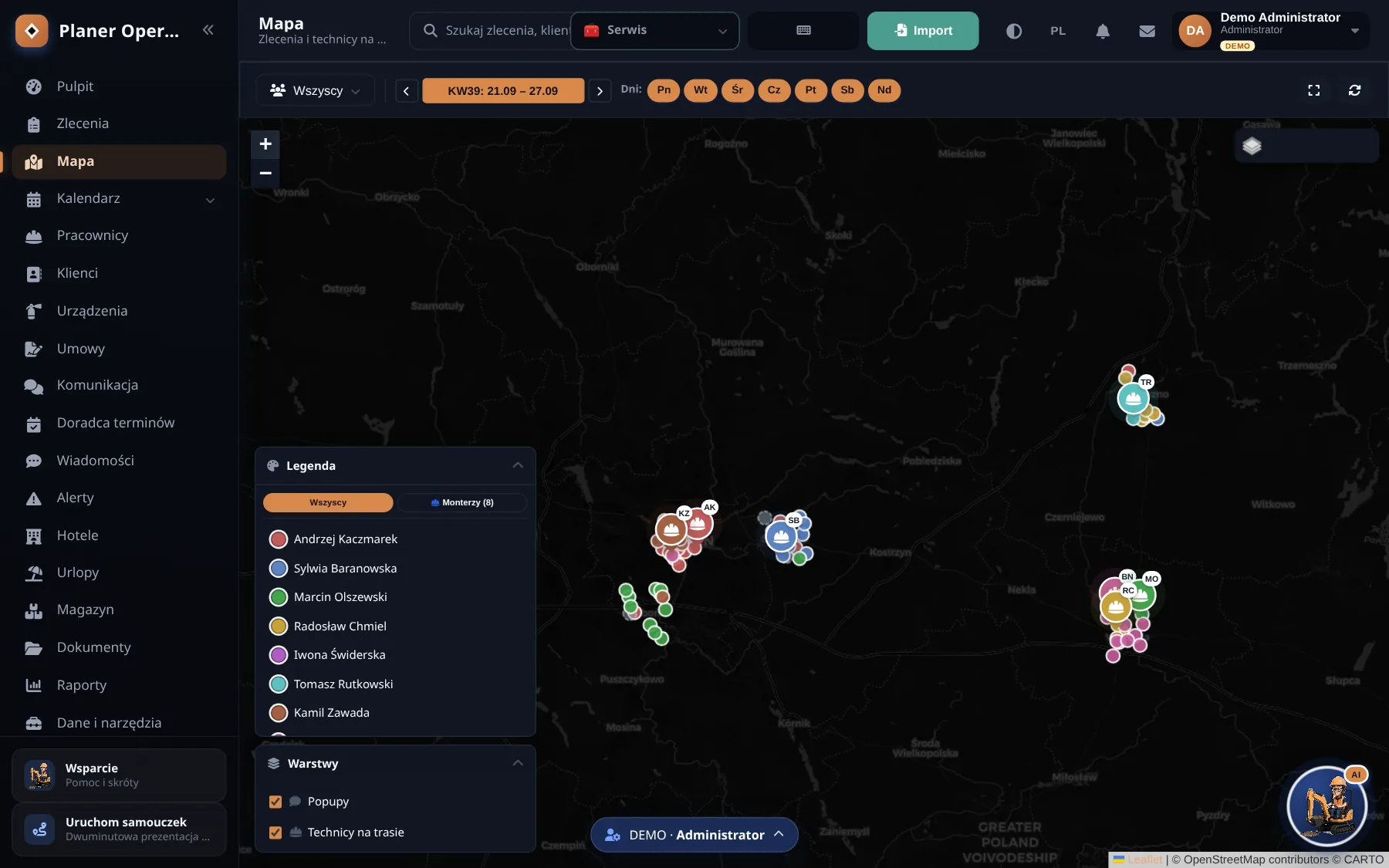
Pin a job with no date and the planner finds a free slot with a crew that is heading that way anyway.
Ready templates in three languages: confirmation, change, reminder.
Generated in the browser, with photos. Images drop from 12 MB to about 400 kB, so the report fits in an email.
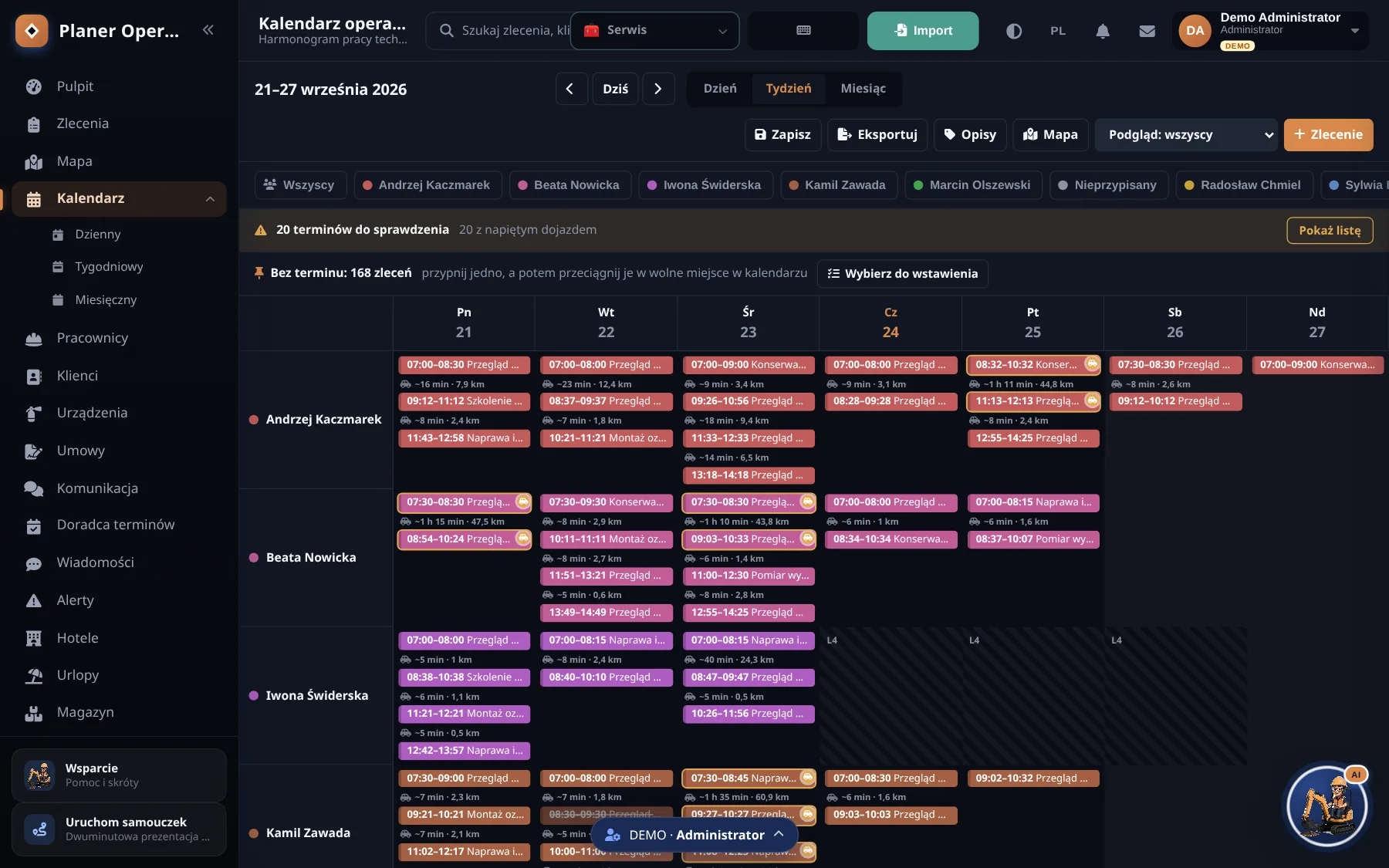
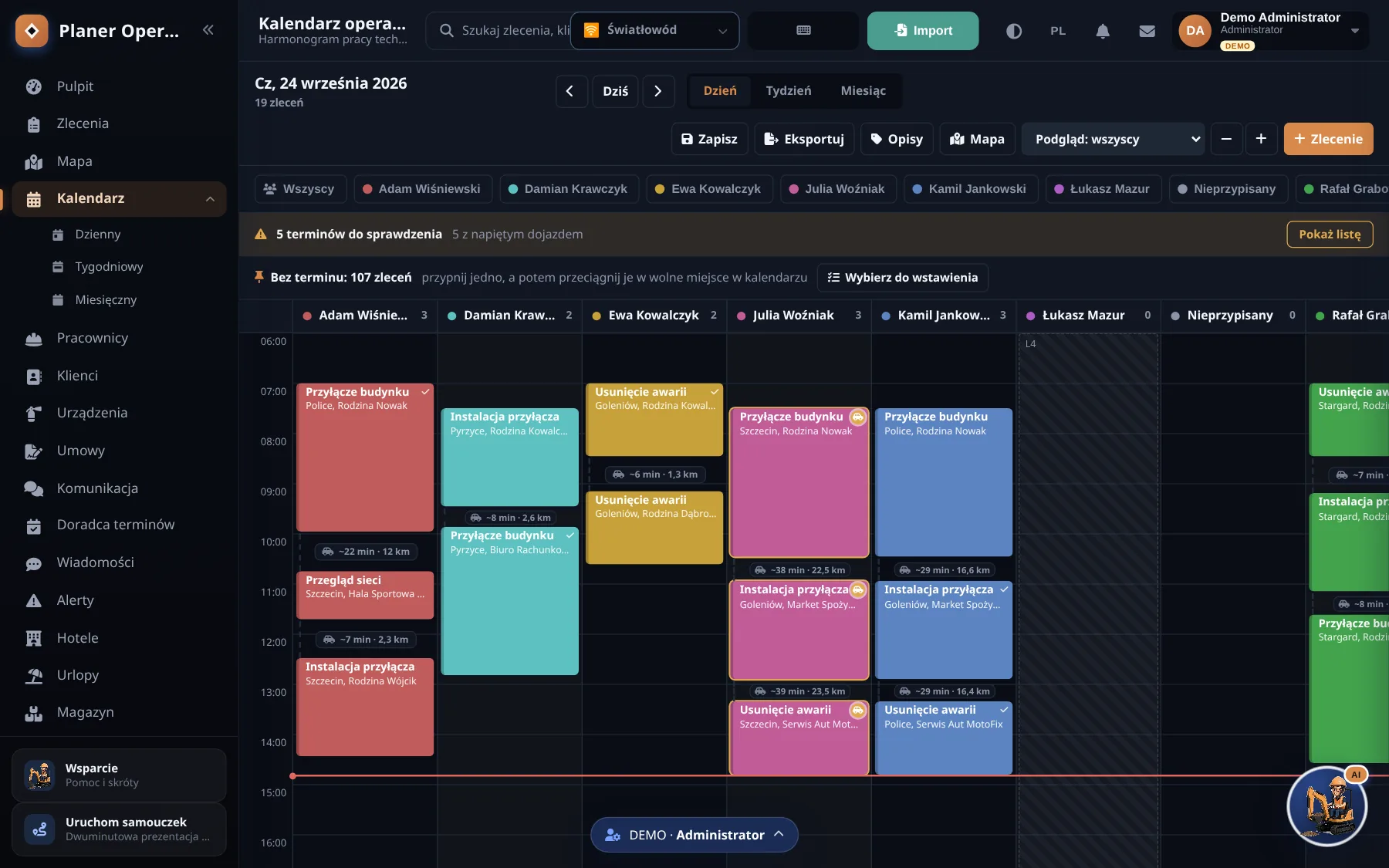
Day, week and month. Drag an appointment and the route is recalculated.
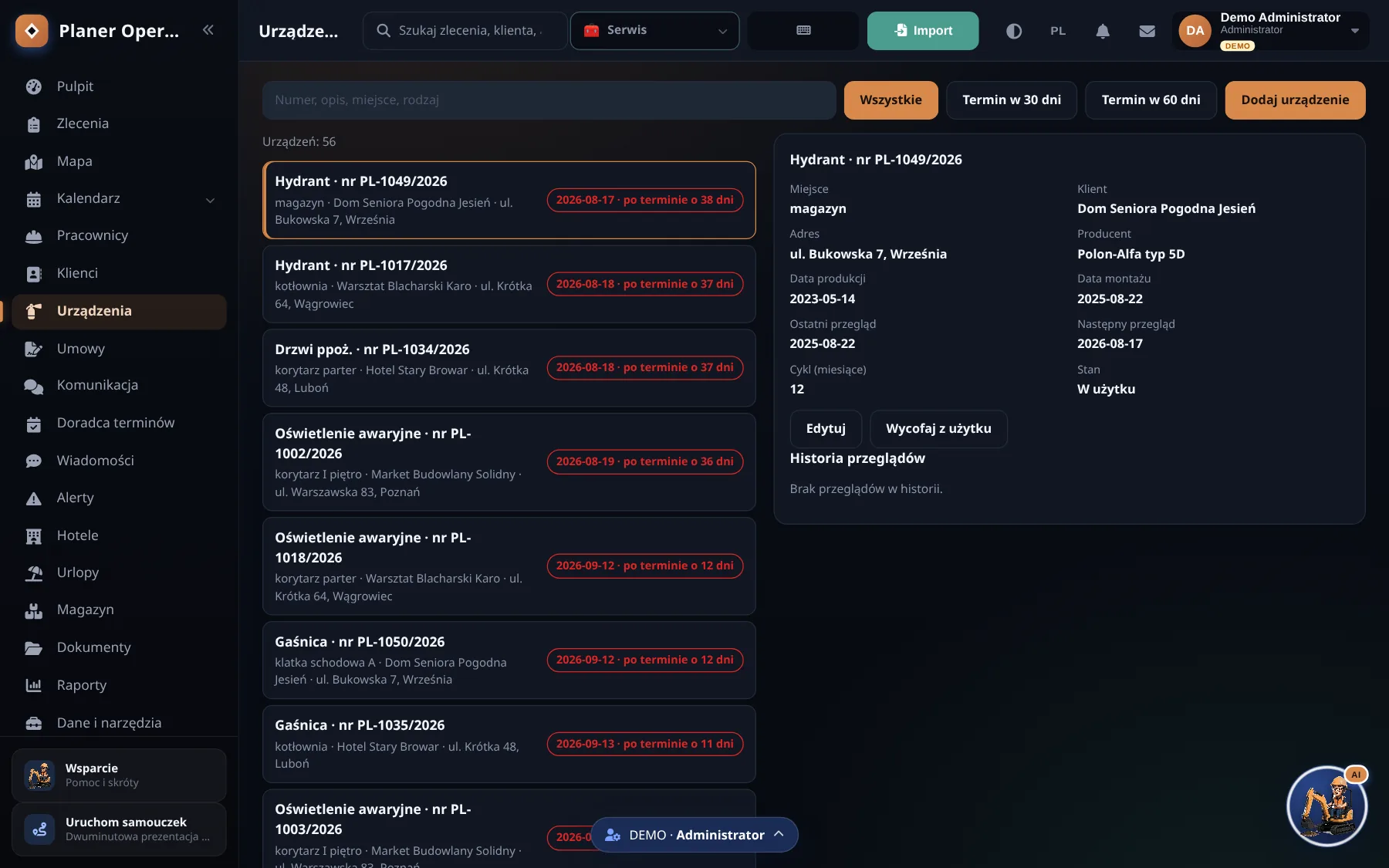
A register of devices at each client and contracts with recurring inspections. The next job creates itself, exactly once.
Who is available, who is on leave, where the crew sleeps on a trip.
Import from Excel and CSV. An integration API with per-company keys and webhooks through Cloudflare Queues.
A German interface, euro and German documents, not a machine translation of Polish terms.
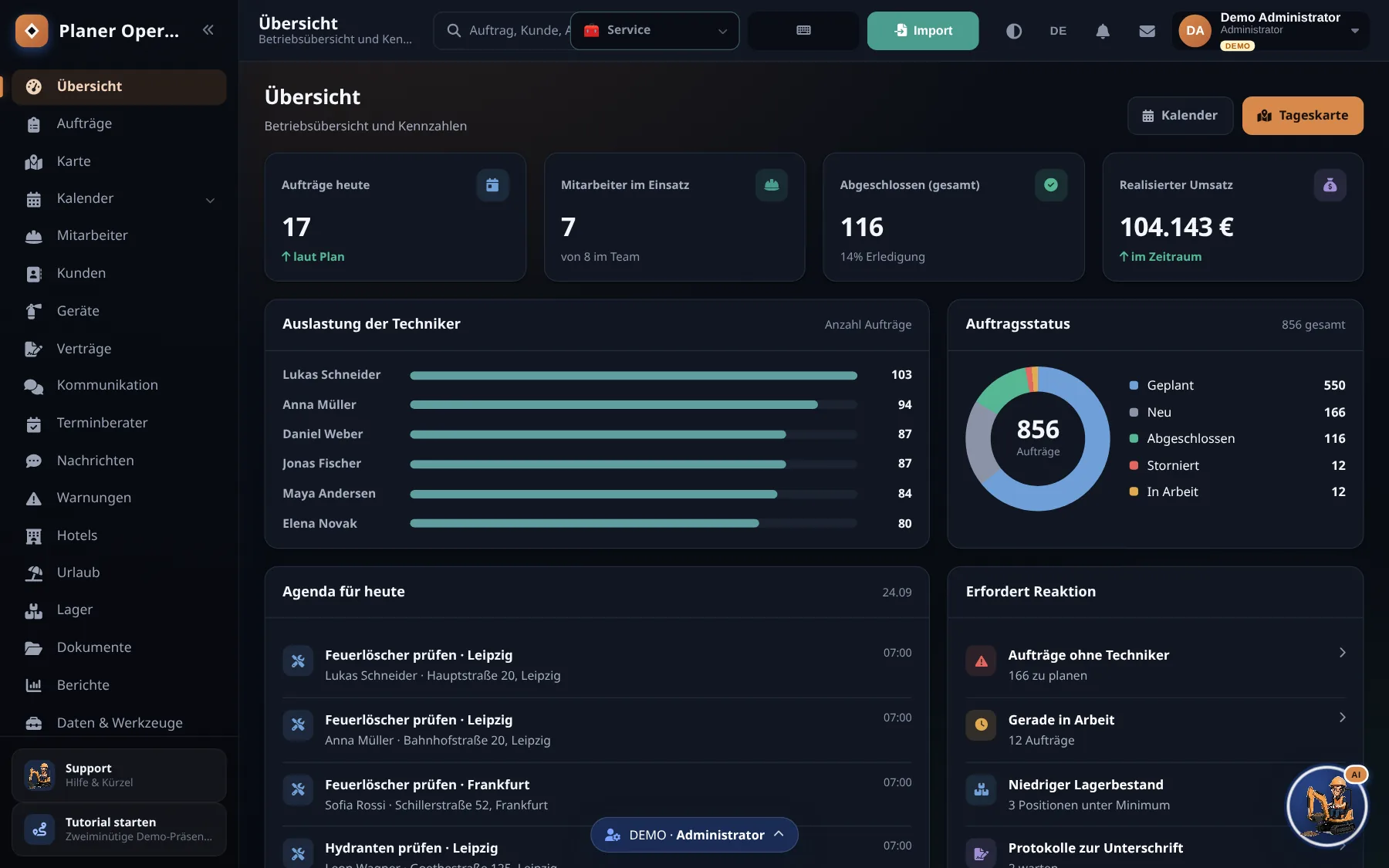
A demo for different trades
The demo runs without an account. It opens on a fire safety service company (extinguishers, hydrants, inspections), and one click switches it to solar, fibre, HVAC or electrical. Jobs, devices, vocabulary and even the currency change: trades from the German market count in euro.
There are four profiles as well: admin, dispatcher, office and technician. Each sees what their job needs and nothing more.
The demo is honest about what is not there yet: photos and client signatures in the technician app are in preparation, and GPS in the demo is simulated.
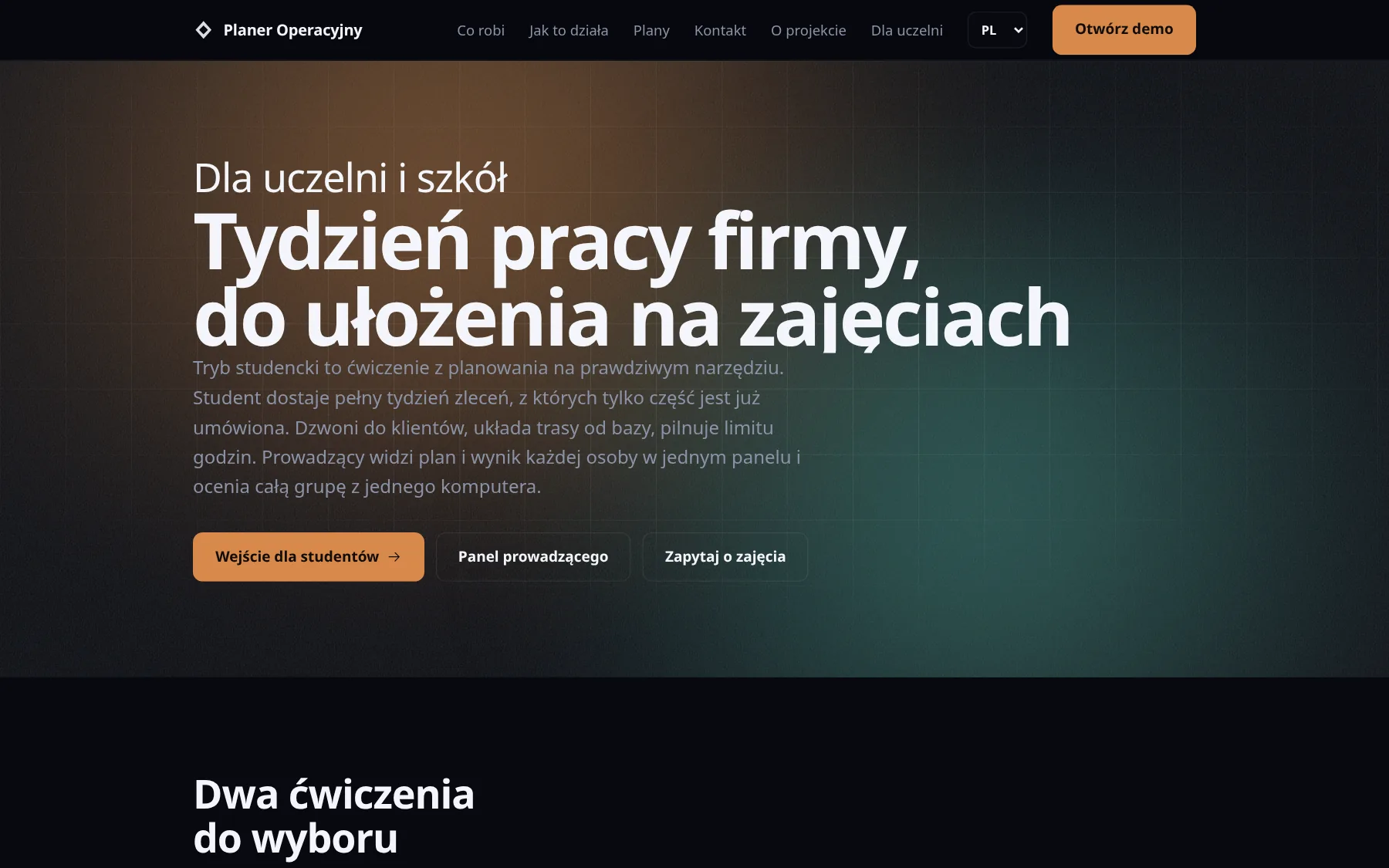
Student mode
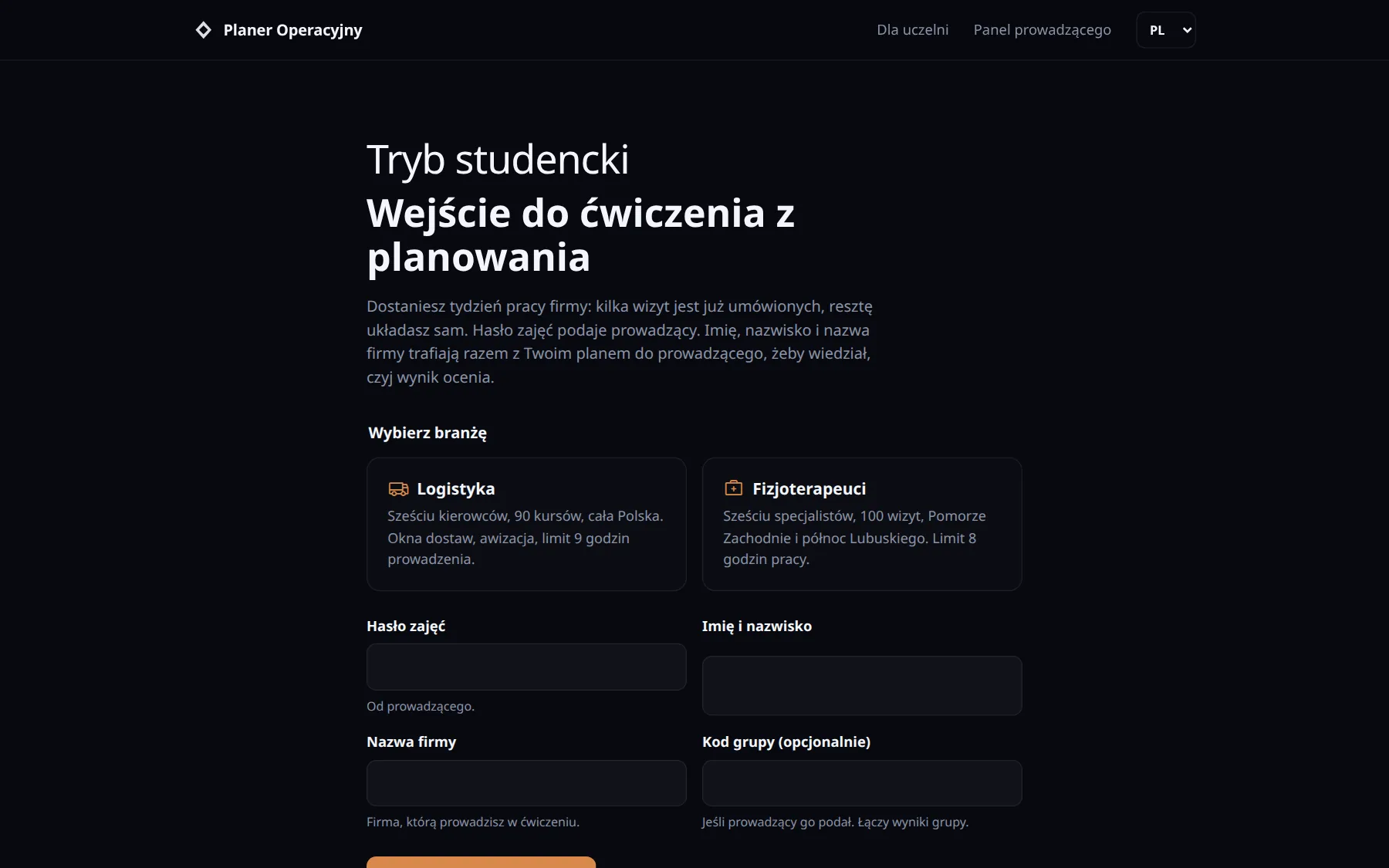
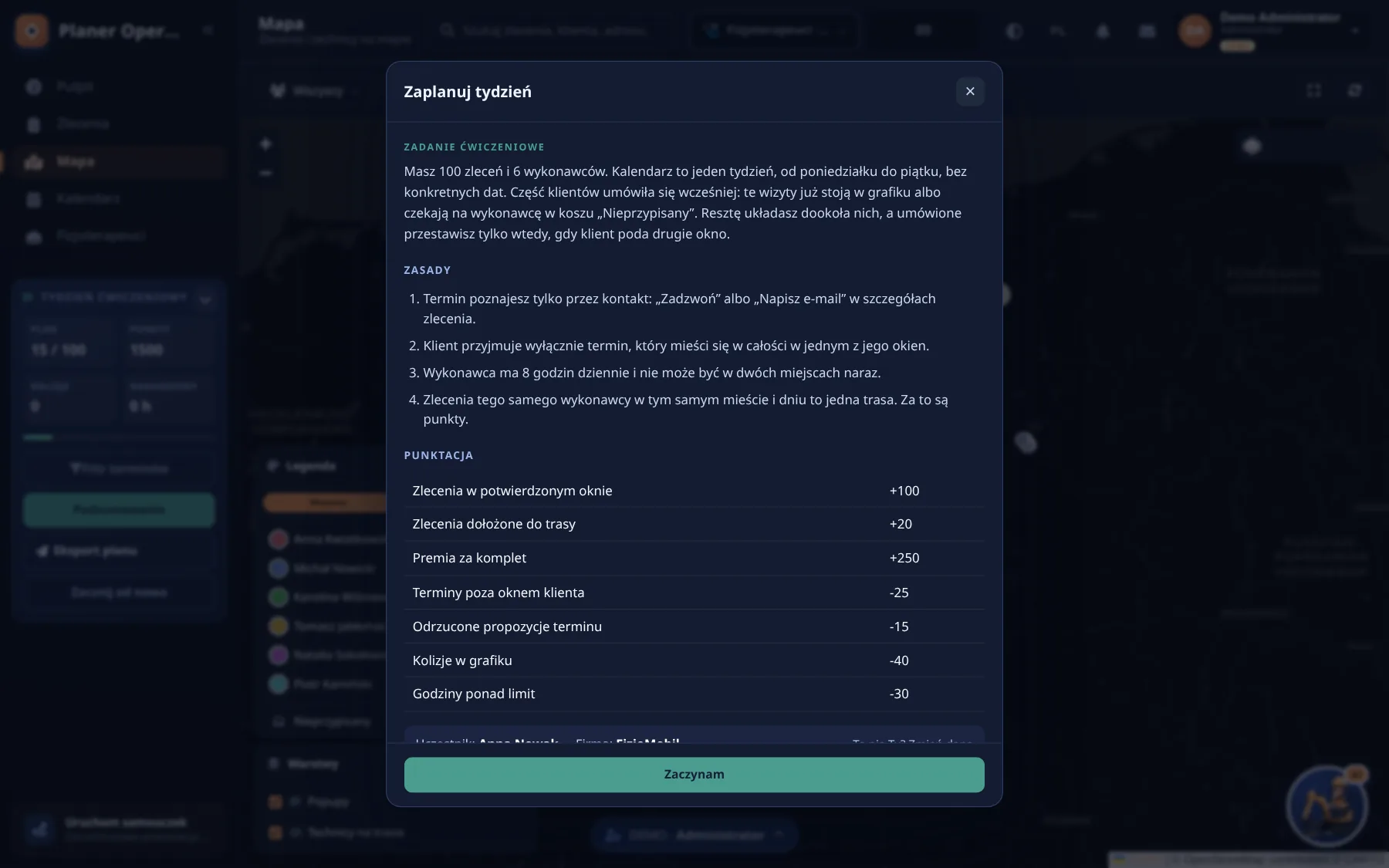
The student gets a working week, Monday to Friday with no dates, and has to plan it. The “physiotherapy” lab: six physiotherapists in West Pomerania, a hundred home visits, eight hours a day. The “logistics” lab: six drivers across Poland, ninety trips, nine hours of driving under EU regulation 561/2006.
Client time windows are not handed over. The student learns them from a simulated phone call or email, as in a real company. Points come for a visit inside a confirmed window, for adding a visit to an existing route and for a clean plan with no clashes; overtime and rejected proposals cost points. Ranks go from trainee to “route master”.
The teacher has a panel with the group’s results. Students need no account, just the class password. In German the map can be Poland or Germany (Berlin and Brandenburg for physiotherapy, all of Germany for logistics).
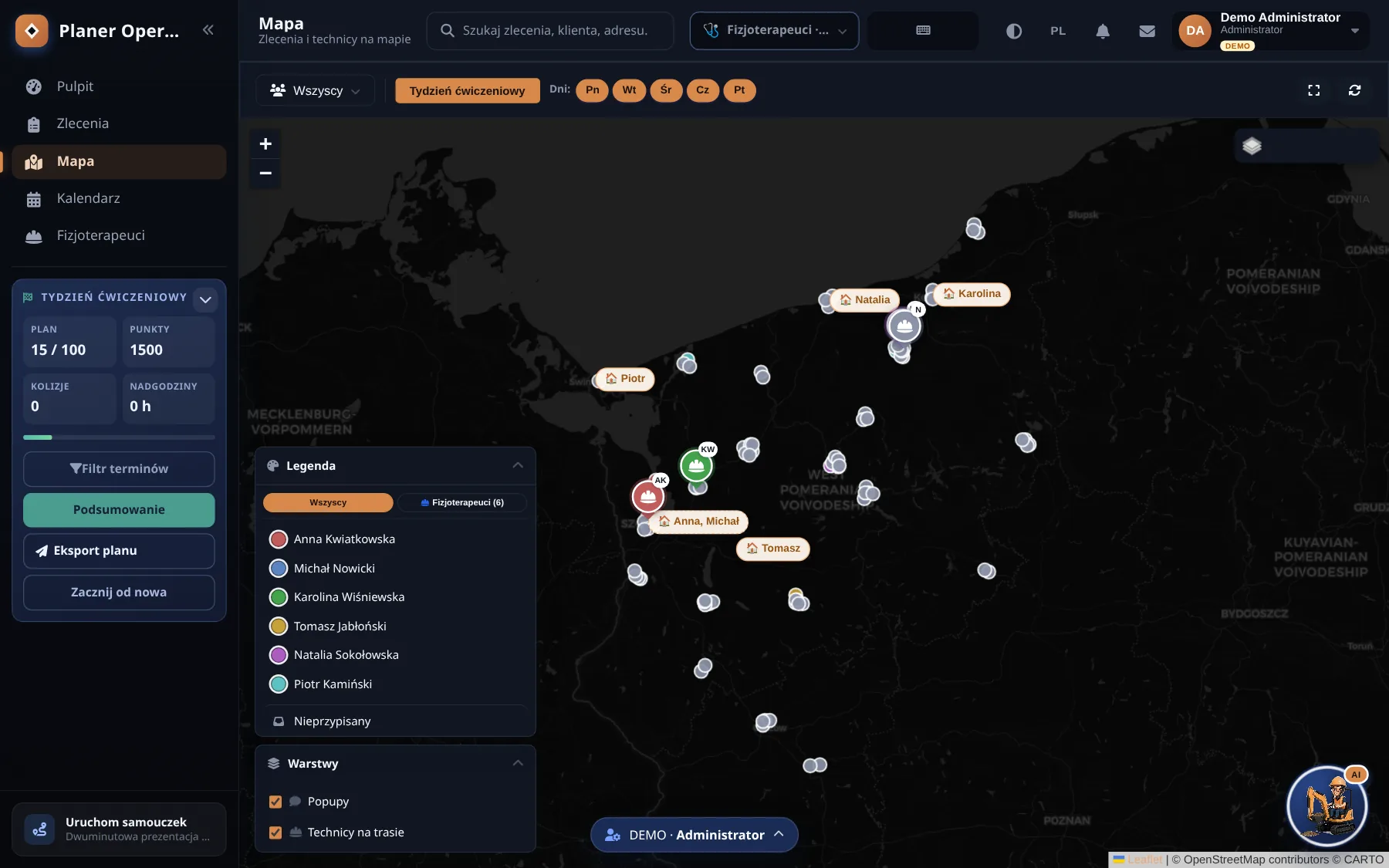
Student mode
Security and upkeep
The planner as a company sees it.
A planning exercise for class.
The exercise described for teachers (in Polish).
Stack
Tell me your trade and how many crews you run. I will show you the planner on your own examples, or tell you honestly that the spreadsheet is still enough.
Or write straight to my inbox:
a.grudzinski1992@gmail.comOther work